
Technology Support should not begin with trying to remember which company installed the firewall, which carrier provides the internet, who manages the phone system, or which support number you are supposed to call when something stops working.
But for many businesses, that is exactly what happens.
An employee cannot access a website. A phone feature needs to be changed. Internet service goes down. A firewall rule needs to be updated. Suddenly, someone inside the business is trying to figure out which vendor owns the problem while employees wait for an answer.
The bigger issue is not always the technology itself. Sometimes it is that no one has clearly established who is responsible for managing it.
Technology Support Is More Than Fixing Outages
When people think about technology support, they often think about something completely breaking.
Internet goes down. Phones stop working. A device fails.
Those situations matter, but they are only part of the support businesses need every day.
Sometimes the request is much smaller.
A website is being blocked by the firewall and needs to be reviewed. A new employee needs access to a system. Call routing needs to change. A location needs another phone number. An internet provider needs to investigate intermittent service. Someone needs to make a configuration change before a new application can work properly.
None of those issues necessarily qualify as a major outage, but they can still interrupt work and create unnecessary frustration.
The question becomes: Who handles it?
Too Many Vendors Can Make a Simple Problem Complicated
Most businesses do not have one company responsible for every part of their technology environment.
The internet may come from one provider. The phones may come from another. The firewall could be managed by someone else. Different locations may even use different carriers depending on what service is available in each area.
That flexibility can be useful, but it creates another problem.
When something happens, employees may not know where to start.
The phone provider may need information from the internet carrier. The internet carrier may determine that the connection is working and suggest checking the firewall. The firewall provider may need additional details about the application experiencing the problem.
Without someone coordinating the process, the business becomes the middleman.
That means an owner, office manager, IT employee, or another member of the team may spend time opening tickets, repeating the same information to multiple vendors, tracking case numbers, and figuring out who should be contacted next.
That is not where their time should be going.
A Technology Advisor Can Become the First Call
One of the biggest benefits of working with a technology advisor is having someone who already understands the vendors supporting your environment.
For my clients, I keep track of the providers involved, support processes, account information, escalation paths, and the people who need to be contacted when something happens.
That means the first question does not have to be, “Who do we call?”
The first call can come to me.
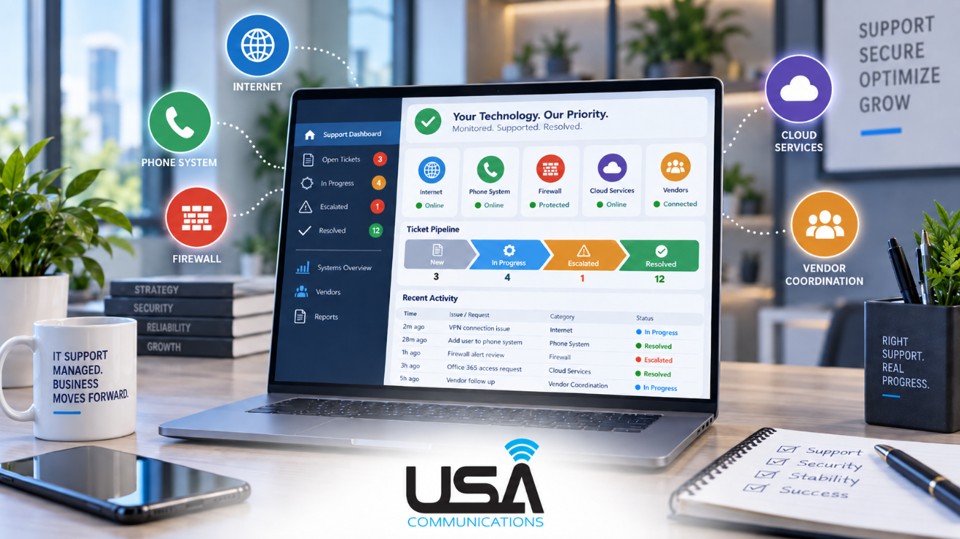
From there, we can determine which provider owns the issue, open the appropriate support ticket, provide the information they need, and follow the escalation process when necessary.
Some providers also offer automated ticketing and defined service-level agreements based on the urgency of the issue. Depending on the problem, response expectations may range from a couple of hours to the following business day.
The important part is knowing those processes before there is a problem.
Readiness Is Knowing Who Owns What
A technology environment does not have to be experiencing an outage for a business to determine whether its support process is ready.
A simple review can answer a lot of important questions:
- Who is the first call when something happens?
Employees should not have to search old emails or invoices to determine where support starts. - Who manages the firewall?
Someone should be responsible for updates, configuration changes, blocked websites, access requests, and troubleshooting. - Who owns internet support?
Know the carrier, account information, support process, and escalation path for every location. - Who manages the phone system?
Routine changes, call routing, new users, reporting questions, and service issues should have a clear support path. - Are ticket numbers and previous issues being tracked?
Historical information can be extremely helpful when the same issue returns or needs to be escalated. - What happens after hours?
Businesses should know which problems qualify for urgent support and what options are available outside normal business hours. - Who coordinates multiple vendors?
When an issue involves more than one provider, someone needs to own the communication between them.
Good Support Starts Before Something Breaks
The easiest time to figure out your support process is when everything is working.
Waiting until employees cannot make calls or access an important system creates unnecessary pressure and usually turns a manageable support request into a much more stressful situation.
Technology support should give your business a clear first call, not another problem to solve.
That is also why technology advising goes beyond helping a business select an internet provider, phone platform, firewall, or other service.
The ongoing relationship matters too.
Knowing your environment, understanding which vendors are involved, tracking support information, and knowing when and how to escalate an issue can save your team significant time when something needs attention.
USA Communications helps businesses review their technology environment, understand who is responsible for each service, and establish clearer support and escalation paths.
A Free Technology Assessment can help identify gaps in your current technology and support process before your team has to figure them out during the next issue.